
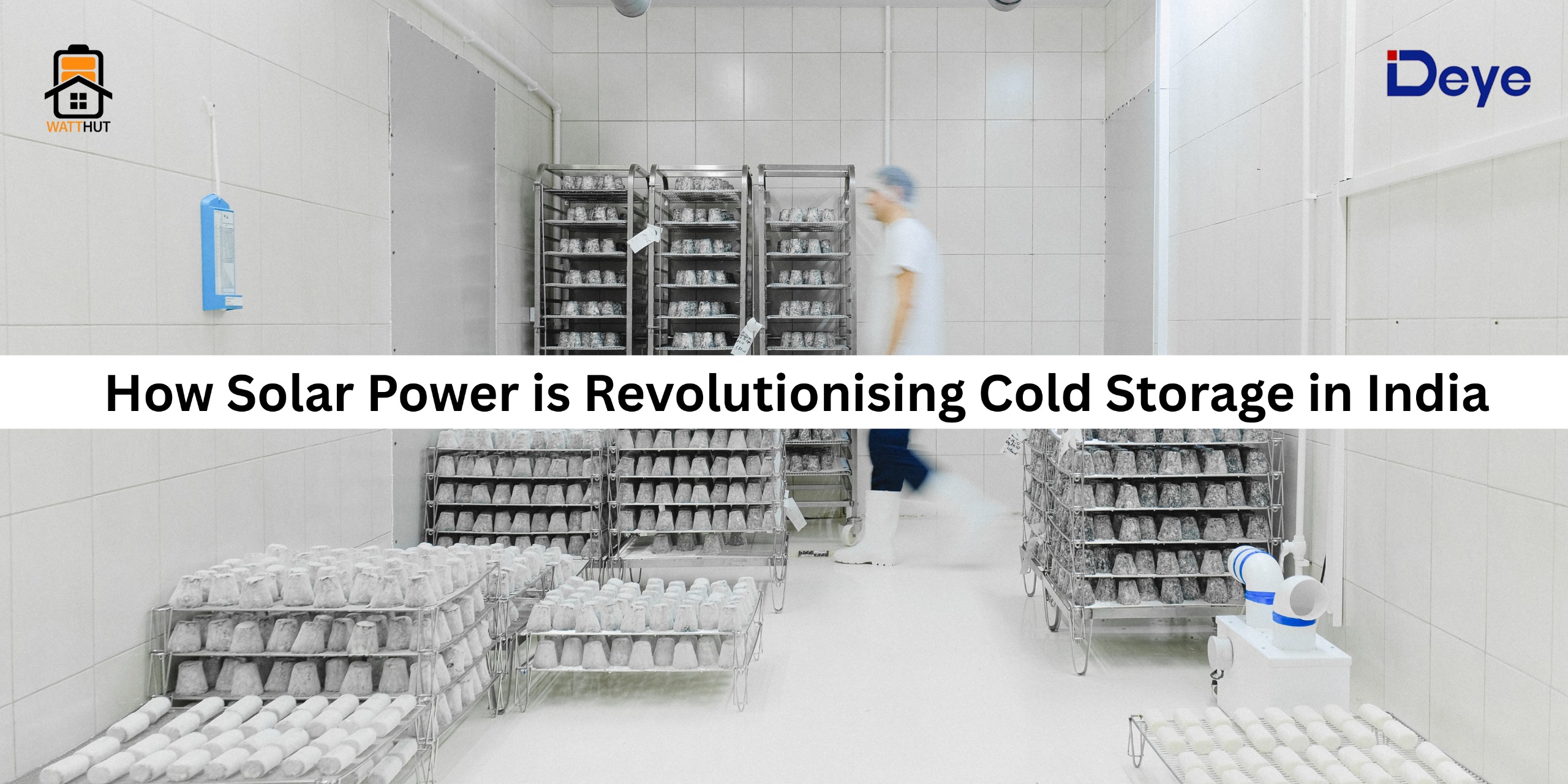
How Solar Power is Revolutionising Cold Storage in India
In India’s agrarian economy, cold storage facilities are a vital link between production and consumption. From preserving perishable fruits and vegetables to ensuring temperature control for pharmaceuticals, cold storage units serve critical roles in multiple sectors. However, running these facilities comes at a cost — especially when it comes to power consumption.
Rising electricity prices and unreliable grid access, especially in rural or semi-urban regions, have long plagued cold storage operators. But now, solar power is emerging as a game-changer. With the right system design — particularly when combined with battery storage — solar energy is proving to be not just a sustainable option but a smart business decision.
The Energy Burden of Cold Storage
Cold storage is an energy-intensive application. Maintaining low temperatures 24/7 means compressors and refrigeration units must run consistently. Even a few minutes of downtime can lead to temperature fluctuations, product spoilage, and financial loss.
Traditionally, cold storage facilities have relied on:
- Grid electricity (which is expensive in many states)
- Diesel generators (which are costly to operate and maintain, and highly polluting) Both of these are either costly, unreliable, or environmentally unsustainable.
Enter Solar + Storage: A Reliable Alternative
Solar energy, when implemented strategically with hybrid inverters and battery backups, can deliver uninterrupted and cost-effective power for cold storage units. Here’s how:
1. Hybrid Inverter Integration
Hybrid inverters allow the system to draw power from solar panels, store excess energy in batteries, and seamlessly switch to grid power or generator as needed. They enable true energy flexibility.
2. Battery Backup for Night Operation
Since solar panels do not generate power after sunset, batteries store excess daytime energy to ensure the facility runs smoothly throughout the night. With lithium-ion or LFP battery banks, long backup durations and deep discharge reliability are achievable.
3. Load Prioritisation
Advanced inverter systems can prioritise critical loads, ensuring that only essential components (e.g., refrigeration compressors) receive uninterrupted power, further optimising energy use.
Why This Matters in India
India produces nearly 400 million tonnes of perishables every year, but due to inadequate cold chain infrastructure, 30–40% of this produce is wasted. The major hurdle? Unreliable and expensive power.
Solar-powered cold storage facilities offer a direct solution:
- Reduced operational costs (by up to 60% in some cases)
- Reliable temperature control even in remote locations
- Reduced carbon emissions, making operations more sustainable
- Improved shelf life for produce, directly benefiting farmers and food suppliers
Success Stories Across the Country
In states like Maharashtra, Gujarat, and Uttar Pradesh, solar-powered cold storage facilities are already making a significant impact. Farmers’ cooperatives, FPOs, and agritech startups are investing in solar+storage to keep produce fresh and reach wider markets.
Even small-scale models (e.g., 5kW–20kW systems with 15–20 kWh battery backup) are being deployed in village clusters, creating decentralised, low-cost cold chains.
Watthut’s Role in Solar Cold Storage Solutions
At Watthut, we specialise in delivering tailored solar energy solutions for complex use cases — and cold storage is one of our focus sectors. Here’s what we bring to the table:
- System sizing based on load profile (temperature, tonnage, compressor specs)
- Correct inverter selection (on-grid, off-grid or hybrid, depending on site conditions)
- Battery bank design (optimised for duration, cycle life, and cost-efficiency)
- Support till commissioning (from shadow analysis to post-installation checks)
We understand that energy reliability is not optional — it’s mission-critical. That’s why our team ensures every cold storage installation we support is built for performance, uptime, and long-term ROI.
Final Thoughts
As India strengthens its cold chain infrastructure, solar energy is no longer just an eco-friendly option — it’s a business necessity. Solar-powered cold storage systems can transform the agricultural supply chain, reduce waste, and boost rural incomes.
Whether you’re a cold storage operator, EPC contractor, or agri-tech innovator, Watthut can help you harness the power of the sun to build reliable, cost-effective, and sustainable storage solutions.